Home › Legal Guides › What Happens If You Don't Pay a Traffic Challan in India Complete Guide (2026)
What Happens If You Don't Pay a Traffic Challan in India Complete Guide (2026)
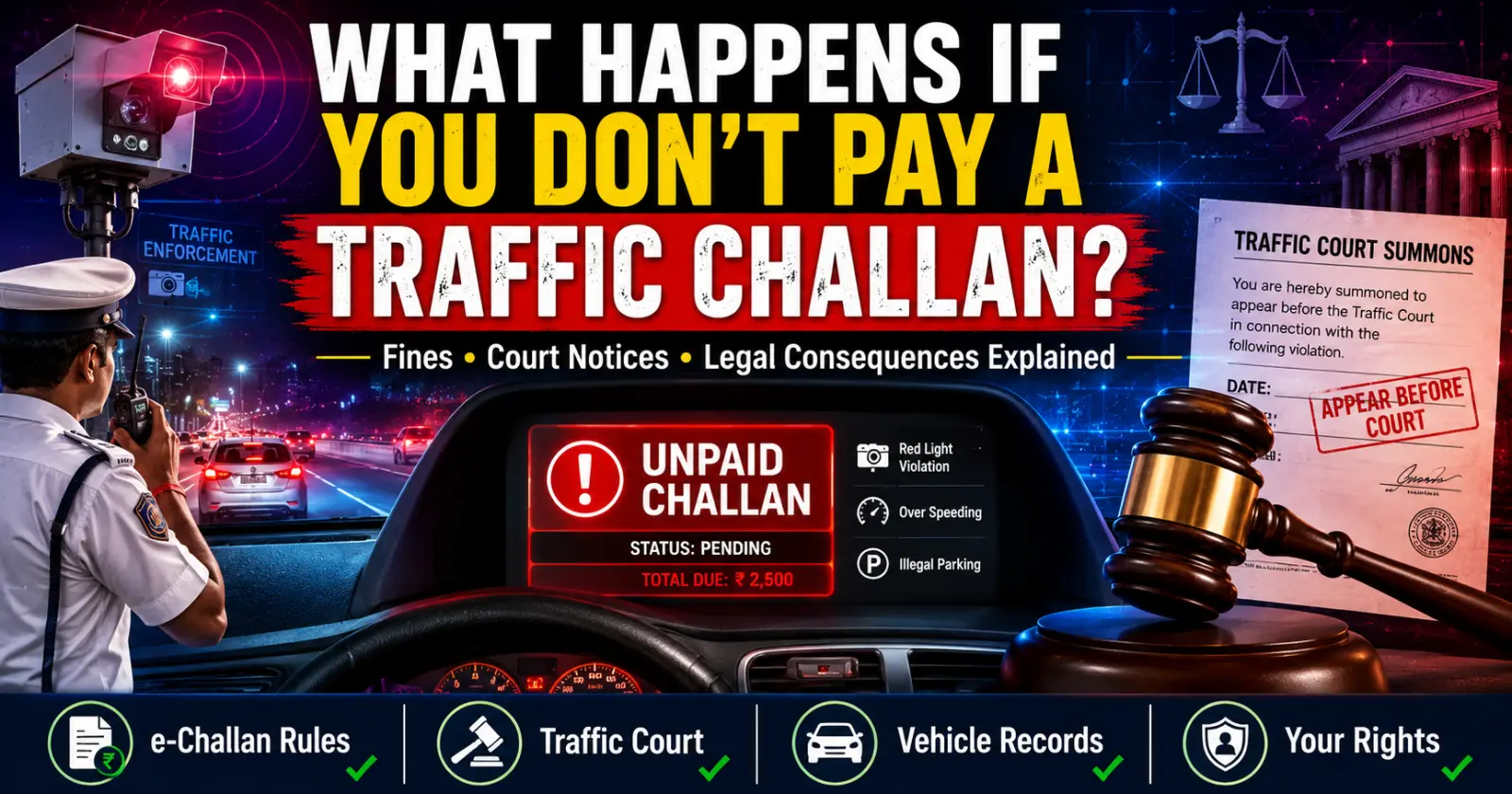
Ignoring a traffic challan may seem harmless, especially if the fine amount is small. However, unpaid traffic challans can lead to serious legal and financial consequences over time.
Whether you received an e-challan through a traffic camera or a physical challan from a traffic police officer, it is important to clear it within the prescribed period.
In this guide, we'll explain what happens if you don't pay a traffic challan in India, how long you can delay payment, and the possible penalties you may face.
What Is a Traffic Challan?
A traffic challan is an official notice issued by traffic authorities when a driver violates traffic rules.
Common reasons for receiving a challan include:
| Traffic Violation |
|---|
| Overspeeding |
| Jumping a red light |
| Driving without a helmet |
| Driving without a seat belt |
| Wrong-side driving |
| Using a mobile phone while driving |
| Driving without valid documents |
| Parking violations |
Most Indian states now issue e-challans through automated cameras and integrated traffic management systems.
Can You Ignore a Traffic Challan?
Technically, yes.
Legally, no.
When a challan is issued, the vehicle owner becomes responsible for clearing the fine. Ignoring it can result in additional legal actions by traffic authorities.
Consequences of Not Paying a Traffic Challan
1. Multiple Pending Challans Keep Accumulating
If you continue violating traffic rules without paying previous challans, the number of pending fines will increase.
This can result in:
| Possible Impact |
|---|
| Higher total penalty amount |
| Difficulty selling the vehicle |
| Increased scrutiny by traffic authorities |
| Legal notices from authorities |
2. Notice From Traffic Department
For long-pending challans, authorities may send:
| Type of Communication |
|---|
| SMS alerts |
| Email notifications |
| Physical notices |
| Court summons |
Ignoring official notices can create additional legal complications.
3. Court Summons May Be Issued
In many cases, repeated non-payment of traffic fines can lead to a court summons.
The vehicle owner may be required to appear before the traffic court or Lok Adalat and explain the non-payment.
Failure to appear can result in further legal action.
4. Vehicle Records May Be Flagged
Traffic departments maintain digital records of violations.
Vehicles with multiple unpaid challans may be flagged during:
| Vehicle-Related Activities |
|---|
| Traffic inspections |
| Roadside verification |
| Vehicle transfer processes |
| Registration-related services |
5. Difficulty During Vehicle Sale
Before purchasing a used vehicle, buyers often check the pending challan history.
A vehicle with unpaid fines may:
| Issue |
|---|
| Reduce buyer confidence |
| Delay ownership transfer |
| Require challan clearance before sale |
| Affect resale value |
6. Additional Legal Proceedings
In serious or repeated cases, authorities may initiate legal proceedings under applicable provisions of the Motor Vehicles Act.
The severity depends on:
| Factor |
|---|
| Number of pending challans |
| Type of violation |
| State-specific enforcement policies |
| Court orders |
How Long Can a Traffic Challan Remain Unpaid?
There is no universal rule applicable across all states regarding the exact duration before enforcement action begins.
However, authorities generally recommend paying the challan as soon as possible after issuance to avoid notices, penalties, or court-related issues.
How to Check Pending Traffic Challans?
You can check pending challans using:
| Method |
|---|
| Vehicle registration number |
| Driving licence number |
| Challan number |
The online challan system allows vehicle owners to view:
| Available Information |
|---|
| Challan amount |
| Violation details |
| Date of violation |
| Payment status |
| Pending fines |
How to Pay a Traffic Challan Online?
Most challans can be paid online through official traffic and transport department portals.
Typical payment options include:
| Payment Method |
|---|
| UPI |
| Debit Card |
| Credit Card |
| Net Banking |
| Digital Wallets |
Always keep the payment receipt for future reference.
Tips to Avoid Traffic Challans
| Tip |
|---|
| Follow speed limits |
| Wear helmets and seat belts |
| Avoid mobile phone usage while driving |
| Carry valid vehicle documents |
| Follow traffic signals |
| Use proper parking areas |
| Renew insurance and pollution certificates on time |
Frequently Asked Questions
1. What happens if I don't pay a traffic challan in India?
If you do not pay a traffic challan, the fine remains pending in government records. In some cases, traffic authorities may send notices, issue court summons, or take further legal action depending on the nature of the violation.
2. Can unpaid traffic challans affect vehicle ownership transfer?
Yes. Pending challans can create complications during vehicle sale or ownership transfer. Buyers often check challan history before purchasing a used vehicle.
3. How can I check if my vehicle has a pending challan?
You can check pending challans using your vehicle registration number, driving licence number, or challan number through official traffic challan portals.
4. Is there a deadline to pay a traffic challan?
The payment timeline may vary depending on the issuing authority and the type of challan. It is advisable to pay the challan as soon as possible to avoid complications.
5. Can I go to jail for not paying a traffic challan?
Simply having an unpaid challan does not automatically lead to imprisonment. However, ignoring legal notices or court summons related to the challan may result in further legal consequences.
6. What happens if multiple challans remain unpaid?
Multiple unpaid challans can increase your total penalty burden and may attract greater attention from enforcement authorities.
7. Can traffic police stop me for an old unpaid challan?
Yes. Traffic authorities can verify vehicle records during routine checks and may ask you to clear pending challans.
8. Can I pay a traffic challan online?
Yes. Most traffic challans can be paid online using UPI, debit card, credit card, or net banking.
9. Does an unpaid challan affect insurance renewal?
Generally, insurance renewal is separate from challan payments, but unresolved violations can create issues during certain vehicle-related processes.
10. Can a traffic challan be disputed?
Yes. If you believe a challan was issued incorrectly, you may challenge it through the prescribed legal or administrative process.
Conclusion
Ignoring a traffic challan is never a good idea. What starts as a small fine can eventually lead to legal notices, court appearances, complications in vehicle transfers, and additional penalties.
To avoid unnecessary problems, vehicle owners should regularly check for pending challans and clear them promptly. Following traffic rules not only saves money but also helps ensure safer roads for everyone.
Recent Posts

What Happens If You Don't Pay a Traffic Challan

Can Police Check Your Phone Without Permission

ChatGPT vs Gemini vs Claude: Which AI Is Best in 2026

IPC vs BNS Top 50 Important Changes Every Student Must Know (2026 Guide)

What Happens If You Don't Pay a Traffic Challan in India Complete Guide (2026)

RRB ALP 2026 Notification 11,127 Assistant Loco Pilot Vacancies Announced, Eligibility, Exam Pattern & Important Dates

SSC CGL 2026 Notification: 12,256 Vacancies Announced, Apply Online Before 22 June